
Share Zafar Nomani's obituary with others.
Invite friends and family to read the obituary and add memories.
Stay updated
We'll notify you when service details or new memories are added.
You're now following this obituary
We'll email you when there are updates.
Select your format and elements to print

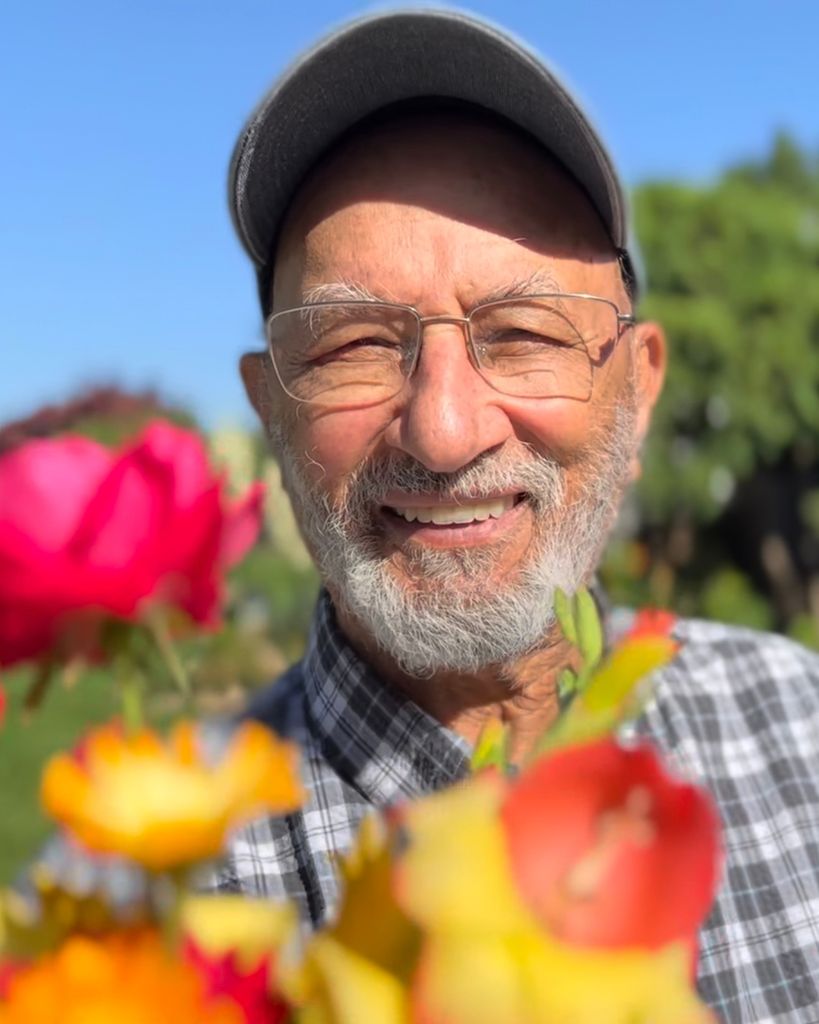


Zafar Nomani
Jun 14, 1933 — Aug 6, 2026
Zafar A. Nomani, "Zaf4Peace," a Pioneer in Nutrition, a Family Man, Leaves This Earth for Greater Service
It was pink flamingos that first brought Dr. Zafar Nomani to America.
As a young professor at Osmania University in Hyderabad, India, Dr. Nomani watched another professor show slides from the United States with brilliant pink flamingos. Those improbable birds captured the young scientist's imagination and set him on a path across an ocean as a pioneer and a peacemaker.
Decades later, he adopted a moniker that captured the philosophy underlying the journey: "Zaf4Peace."
Dr. Nomani, a husband, father, grandfather and West Virginia University professor emeritus of nutrition who pioneered research into fasting and cholesterol, died Aug. 5, 2026, in Morgantown, his family bedside for weeks as fought illness with courage and gratitude. He was 93.
His wife Sajida, son Mustafa, daughter Asra, granddaughter Safiyyah, grandsons Samir and Shibli and daughter-in-law Kenzy whispered into his ear the three words he spent their lifetimes uttering to them in word and service: "I love you."
The son of Mumtaz Ahmed Nomani and Zubeida Nomani, he first arrived in America in 1962 in Manhattan - Manhattan, Kansas - where he came as a teaching fellow from Osmania University. Newly married to his beloved wife, Sajida, he penned letters to her from his bunkbed.
There, Dr. Nomani saw college students washing cars alongside their professors and saw in that moment something he said he deeply admired: "The dignity of labor."
In 1965, he applied to 100 colleges for assistantships and returned to pursue a doctorate in clinical nutrition at Rutgers University, pioneering a new generation of immigrants from India charting new professional lives in the United States. He approached life with similar clarity. "If you don't try," he often told his family, "there's a 100% chance that you won't get what you want."
Dr. Nomani possessed a theoretical and practical intellect. His nutritional philosophy was simple before it was hip: "Eat everything, but in moderation."
Together, his wife and he built an American life. In 1975, with their son Mustafa and daughter Asra, the couple drove their green Wrangler station wagon into Morgantown, where Dr. Nomani had accepted a position as an assistant professor of nutrition at West Virginia University.
Few Indian or Muslim families lived in Morgantown then. Dr. Nomani became a pioneer in both communities, helping chart a path that immigrant families and international students would follow in subsequent decades.
He was a beloved brother and uncle. He is survived by sisters Sultana, Farhat, Nuzhat, Talat and Ishrat and brother Akthar. He is preceded in death by his brothers Azhar, Athar, his twin brother Badar and Mazar and his sister Noorjehan.
He is survived by his nieces Anjum, Naheed, Shahla, Shaheen, Nasreen, Uzma, Nazish, Irum, Shazia, Ibtesam, Aamna, Hira and Zoha.
He is survived by his nephews Ghazanfar, Nasir, Azfar, Aslam, Aamir, Sohail N, Salman, Sohail A, Shakeel, Shakaib, Saqib, Ali, Shauki, Ashhab, Asmer, Umar, Mohtashim, Sohaib, Saad, Sarmad, Saami and Sameed. He is preceded in death by his nephew Pervaiz.
Dr. Nomani is a founder of the mosque in Morgantown, creating a place where Muslims could worship, gather and build a community.
At WVU, he won tenure, building a career around the land-grant university mission of research, teaching and service that he so embraced. His scientific interests placed him at the intersection of two subjects that would become increasingly important in nutrition: cholesterol and fasting.
Long before "intermittent fasting" entered popular culture, Dr. Nomani recognized that the Muslim month of Ramadan fasting offered a natural opportunity to investigate the potentially positive effects of recurring periods of fasting on the human body.
His research examined changes associated with Ramadan fasting in body weight, cholesterol and other blood lipids, glucose, urea and uric acid. His work appeared in publications including The American Journal of Clinical Nutrition and the Journal of the American Dietetic Association, becoming part of a scientific literature researchers would continue to cite decades later.
In 1994, his work received international recognition in Morocco when he was awarded the King Hassan II International Award for Ramadan and Health for his contributions to the scientific understanding of fasting.
Dr. Nomani mentored graduate students whose work addressed childhood nutrition, diabetes education, maternal nutrition and other practical health questions. He had a favorite vitamin: B12, which he called the "personality vitamin" because it boosted positive moods.
His gift was making complicated ideas understandable. Nutrition was multifactorial because food interacted with metabolism, behavior, culture, environment and individual biology. The same principle governed his view of human beings.
"Life is multifactorial," he would say.
That idea eventually found expression in "Zaf4Peace," a playful moniker for a YouTube channel he created long before influencers and podcasts. Dr. Nomani believed people could find common ground across nationality, religion and culture.
The philosophy had roots much earlier than his academic career. Born in India in 1933, Dr. Nomani stood in food lines during the Bengal famine of 1943. The boy who experienced hunger would become a scientist internationally recognized for pioneering concepts in improving nutrition.
Yet he resisted grievance. There, he adopted his life strategy: "Serve humanity."
He lived with another philosophy that ran through his life: "I get to." He would say: I get to eat. I get to study. I get to work. I get to teach. I get to serve. He transformed adversity with gratitude.
With his beloved wife, his children and grandchildren, he one day also saw the pink flamingos in America that drew him to a new world of adventures and service to humanity.
He was honored after the 1:30 p.m. Friday prayer on Aug. 7 with a funeral prayer at 2 p.m. at the Islamic Center of Morgantown at 434 Harding Avenue and laid to rest at 3 p.m. at 1777 Fairchance Road in Morgantown.
His life will be celebrated at "Sajida's House" on Saturday, Aug. 8, at 11 a.m. Please contact 304-685-2189 for location.
Service Schedule
Past Services
Funeral Service
Friday, August 7, 2026
2:00 - 3:00 pm (Eastern time)
Morgantown Islamic Center
Burial
Friday, August 7, 2026
3:00 - 4:00 pm (Eastern time)
Islamic Center of Morgantown Cemetery
Celebration of Life
Saturday, August 8, 2026
11:00 am - 12:00 pm (Eastern time)
Please contact 304-685-2189 for location
Guestbook
Visits: 924
This site is protected by reCAPTCHA and the
Google Privacy Policy and Terms of Service apply.
Service map data © OpenStreetMap contributors